Zaha Hadid: A Visionary Legacy in Steel and Glass
Dame Zaha Hadid—renowned for her boundary-breaking architecture and fluid geometries—forever altered the global architectural landscape with her bold vision of the future. The first woman and the first Muslim to receive the prestigious Pritzker Prize, Hadid built a career on challenging conventions and reimagining the role of form in design. Her final years marked a new chapter: translating her avant-garde language into luxury residential living. 520 West 28th Street, her only completed residential project in New York City, stands as a rare embodiment of that vision—bold, curvilinear, and unapologetically original.
520 West 28th: A Sculptural Dialogue with the City
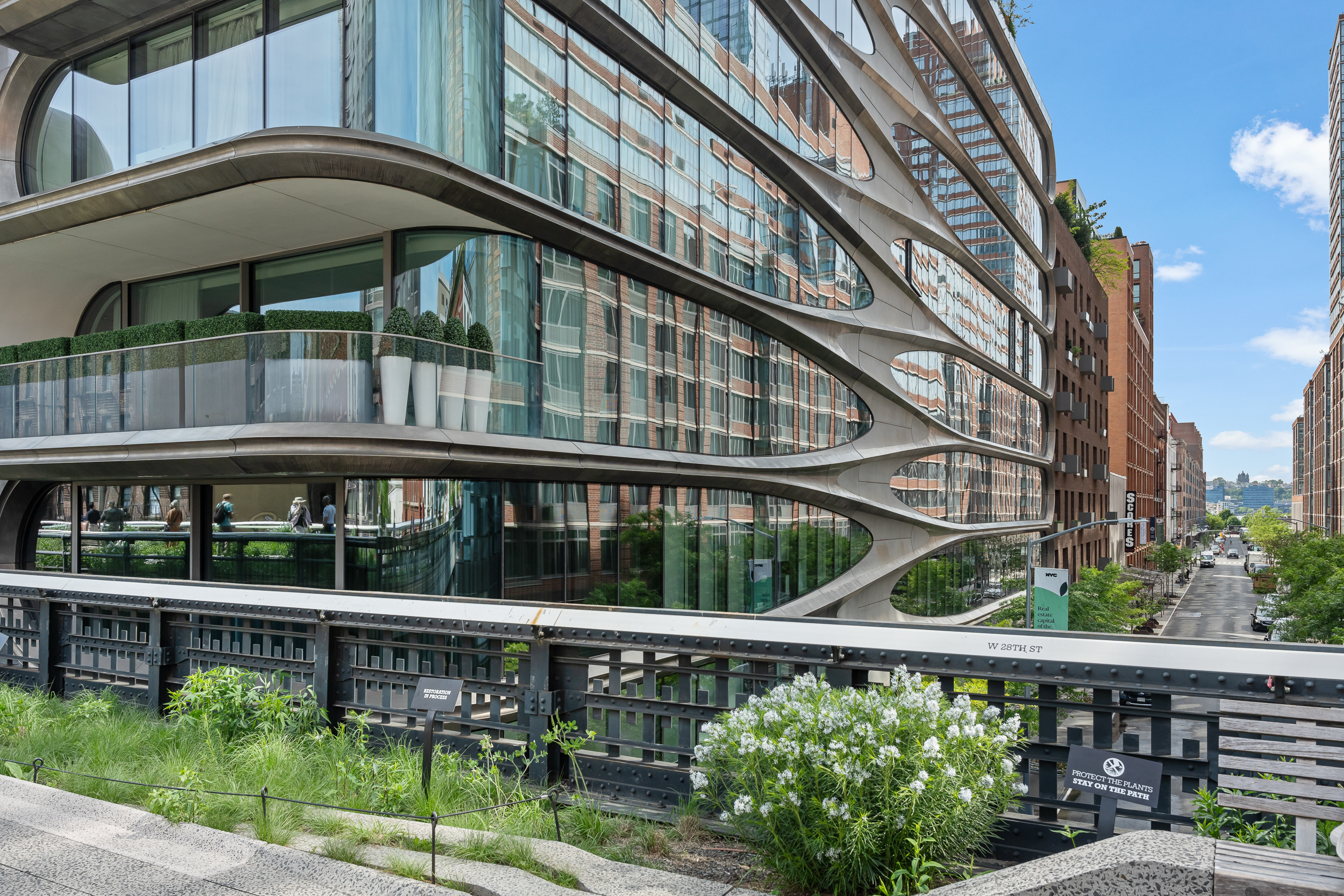
Designed in collaboration with architect Ismael Leyva and located alongside Manhattan’s famed High Line, 520 West 28th is more than a building—it’s a living work of art. Inspired by Hadid’s own walks through the neighborhood, the structure was conceived as an “urban balcony,” responding to the city’s motion with interlacing levels and sweeping curves. Its hand-crafted steel façade, accented by interlocking chevrons, mirrors the energy of West Chelsea’s industrial past while projecting a kinetic, futuristic presence. The design’s fluidity is echoed inside: L-shaped floorplans, soaring ceilings, and private elevator entries create spaces that are at once dramatic and deeply livable.
An Architectural Icon, Inside and Out
Every element of 520 West 28th reflects Hadid’s belief that architecture should be both expressive and experiential. From the sculptural steel and glass façade to the seamless indoor-outdoor integration of each residence, the building blurs the boundaries between structure and art. Thoughtfully curated amenities—including a sky-lit swimming pool, private IMAX theater, and robotic parking—enhance the residential experience without compromising the design’s integrity. As one of her final works, 520 West 28th is not just a home—it’s a tribute to Hadid’s revolutionary spirit and her enduring influence on the evolution of urban architecture.
